
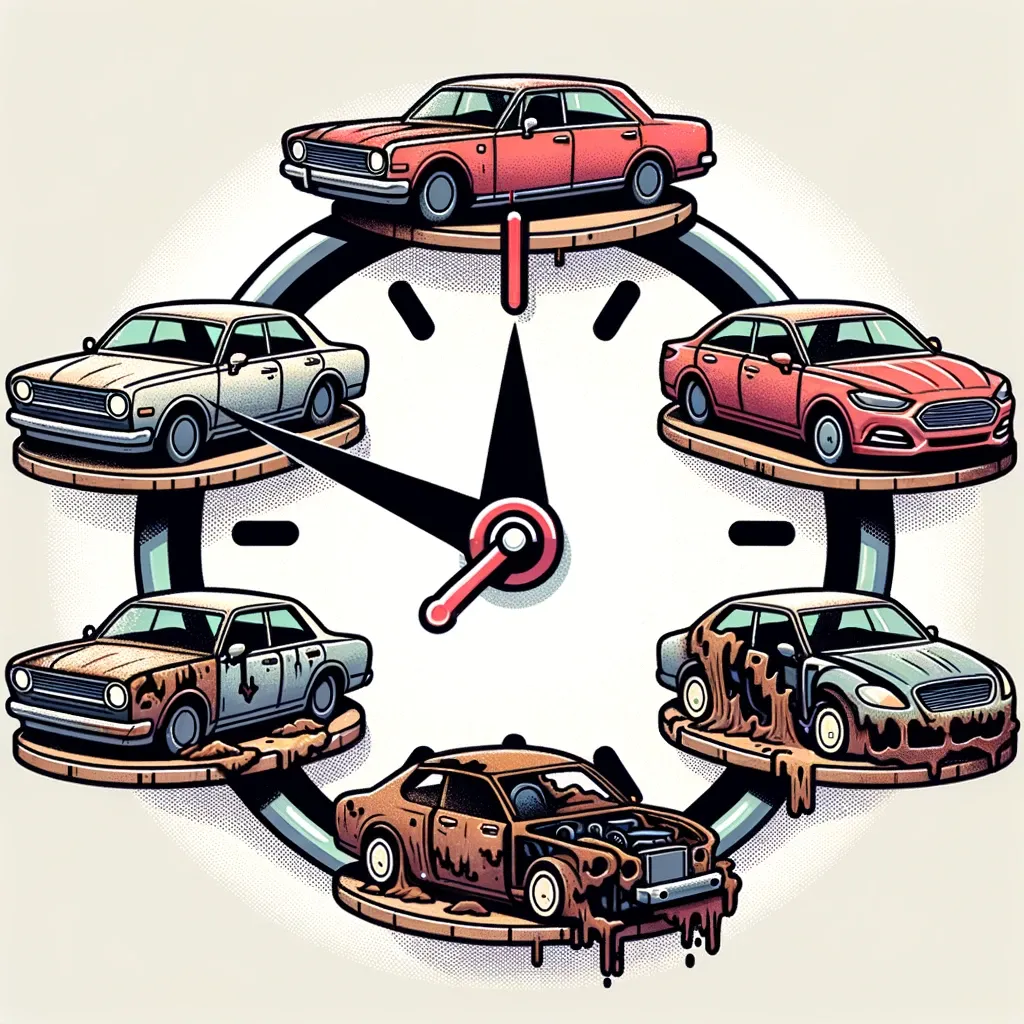
We've all been there. That dreaded brown envelope lands, or the garage rings you up and says "yeah, it's not looking great." Your car's failed its MOT, and now you're staring down a repair bill that makes you wonder if the old thing is even worth saving.
Well, in 2026, that question is coming up a lot more often. We wrote a broader piece on when the right time is to scrap your car — but this one's specifically about the MOT changes. The DVSA has tightened things up again this year, and honestly, it's catching a lot of people off guard — especially anyone running an older diesel or a car that's been patched up one too many times already.
So what's actually changed?
It's not one massive overnight change — more like a steady squeeze that's been building for a few years now. But here's what's hitting people hardest this year:
Emissions are the big one. Diesels are getting hammered with tougher particulate filter checks, and even older petrol cars are struggling to meet the tighter CO2 limits. If your emissions system isn't working properly, that's a straight fail — no ifs or buts.
They've also stepped up the safety side. There's more scrutiny on rust and corrosion (especially structural stuff), brakes are being looked at more closely, and if your car has any kind of driver-assist system fitted, they're checking that too now.
And for anyone with a hybrid or an older car over 10 years old, there are new electrical checks — battery condition, wiring, warning lights, the lot.
Sometimes a repair is the obvious answer
Look, not every MOT failure means your car's done. If it's a bulb, a wiper blade, or a borderline tyre — just get it sorted. That's a quick fix and you're back on the road.
Same goes if your car is still fairly young, say under 8 years old with decent mileage. The repair cost is probably a small fraction of what the car's actually worth. And if it's only failed on one thing, it's usually a no-brainer to fix it.
But here's when scrapping starts to make more sense
This is the situation we see every single day at Cittruss, and it's getting more common in 2026.
The repair costs more than the car. Your garage says it needs £800 of work. You check what the car's actually worth — maybe £400 on a good day. That maths doesn't work, does it? You'd be spending money you'll never get back.
The advisories are piling up. Maybe it passed this time, just barely, but the advisory list is a mile long. Corroded brake lines, knackered suspension bushes, rust creeping into the sills. That's not a list that gets shorter — those are next year's failures, and the bill only grows.
The DPF needs replacing. This one's a killer. A new diesel particulate filter can run anywhere from £1,000 to £2,500, sometimes more depending on the model. If your car isn't worth that much, you're effectively buying the car twice over just to keep it running.
You're spending more keeping it going than it would cost to replace it. We talk to people all the time who've spent £300 here, £500 there, another £200 last month. When you add it all up over a year, they could've put that towards something newer and more reliable. There comes a point where you have to stop throwing good money after bad.
"But my car's failed its MOT — is it even worth anything?"
This is probably the most common thing people ask us, and the answer is almost always yes. A car that's failed its MOT still has value — sometimes quite a bit of it.
The scrap value depends on a few things: how heavy the car is (more metal = more value), whether the engine and gearbox still work, the state of the catalytic converter, and what scrap metal prices are doing at the time. In 2026, most cars are fetching somewhere between £100 and £500, though some come in higher. We break down how much you get for scrapping a car in the UK in more detail.
The point is, don't assume it's worthless just because it won't pass an MOT.
How it works with Cittruss
We've tried to make this as painless as possible because, let's be honest, nobody enjoys scrapping their car. Here's what happens:
You give us the details about your vehicle and we'll give you a price — doesn't matter if it's got an MOT or not. If you're happy with the quote, we come and collect it from your door for free. You get paid there and then, on the spot. We sort out the Certificate of Destruction, let the DVLA know, and make sure everything's recycled properly. That's it. Done.
No dragging it to a garage, no haggling, no paperwork headaches.
Not sure yet? Here's what I'd do
If you've just had a fail and you're genuinely not sure which way to go, try this:
Get the full MOT report — not just the fail items but the advisories too. That gives you the real picture. Then get your garage to write up an itemised repair quote, so you know exactly what you're looking at. Have a quick look online at what your car would sell for if it was actually working. Now compare those numbers.
A good rule of thumb: if the repairs are going to cost more than half of what the car's worth in working condition, it's probably time to let it go.
And then give us a ring or get a quote on the website. You might be surprised — what your car's worth as scrap could be more than you think, and it's money in your pocket today rather than money down the drain at the garage.
The bottom line
The 2026 MOT rules are tougher, and that's not a bad thing — nobody wants unsafe cars on the road. But it does mean more older vehicles are going to struggle to pass without expensive work. If yours is one of them, don't sit on it and keep spending. Find out what it's worth, weigh up your options, and make a decision that actually makes financial sense.
Get a free quote from Cittruss — we're here 24/7, covering Wolverhampton, Stourbridge, and the rest of the West Midlands.